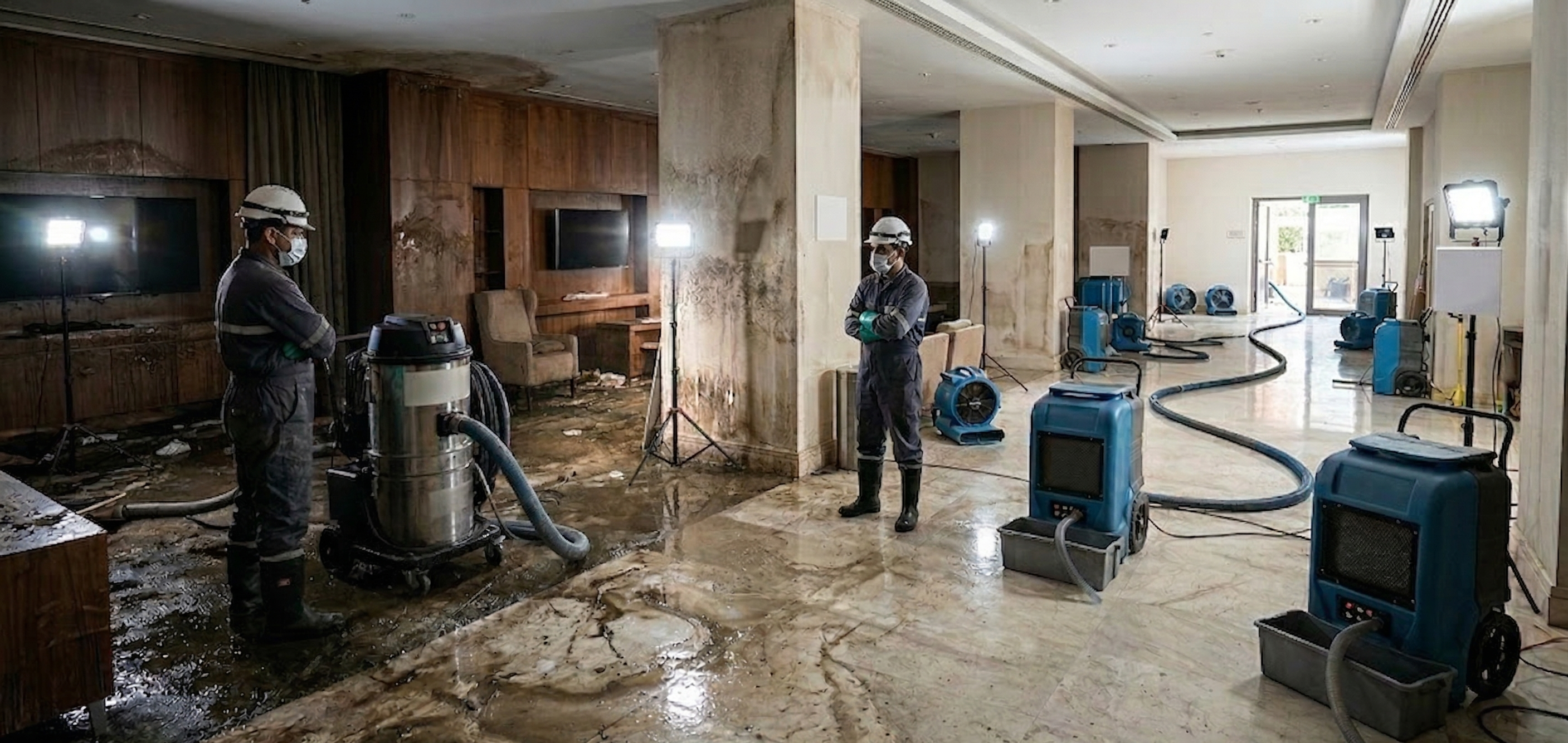
After a sudden flood, extracting visible water from the surface is only the tip of the iceberg. The real danger lies in the hidden moisture that penetrates deep into concrete pores, wall cavities, and underfloor layers—often amounting to thousands of liters.
If left untreated, this trapped moisture leads to corrosion in structural reinforcements, weakening the building from within. At the same time, mold, fungi, and bacteria triggered by excess humidity not only damage your belongings but also create persistent odors and serious respiratory health risks.
The first 24 hours after a flood are critical to preventing long-term structural damage. If you need rapid drying, moisture measurement, and professional damage assessment, our 24/7 emergency response team is ready to assist.
At NemTürk, our experts take immediate action using scientific methods to secure your property and minimize losses.
Standard cleaning methods may dry the surface, but they cannot reach the deeper layers of building materials. Untreated moisture can lead to the following permanent damages:
Water penetrating concrete causes reinforcement steel to rust, expand, and crack the surrounding structure—compromising structural integrity.
Underlayment beneath parquet acts like a sponge, absorbing water rapidly. Without professional drying, even high-quality wooden floors can warp, darken, and swell within days.
Moist wall interiors create the perfect breeding ground for black mold (Stachybotrys) and bacteria, turning your living space into a health hazard.
Moisture trapped behind wallpaper and under plaster leads to long-lasting, musty odors that are extremely difficult to eliminate.
At NemTürk, we don’t just remove water—we eliminate moisture at a molecular level, ensuring complete structural recovery. Our professional restoration process includes:
Using advanced vacuum systems, we remove stagnant water from hard-to-reach areas such as beneath parquet or screed layers. This process significantly increases the chances of saving existing floor coverings without removal.
After surface drying, our industrial-grade dehumidifiers take over—extracting moisture from deep within structural elements.
Unlike heat-based drying methods that can cause secondary issues, our condensation technology removes moisture completely from the environment, preventing further damage such as condensation-related mold growth.
We don’t rely on assumptions like “it looks dry.” Instead, we use advanced digital moisture measurement tools to analyze humidity levels deep within the structure.
By ensuring scientifically verified drying, we help: